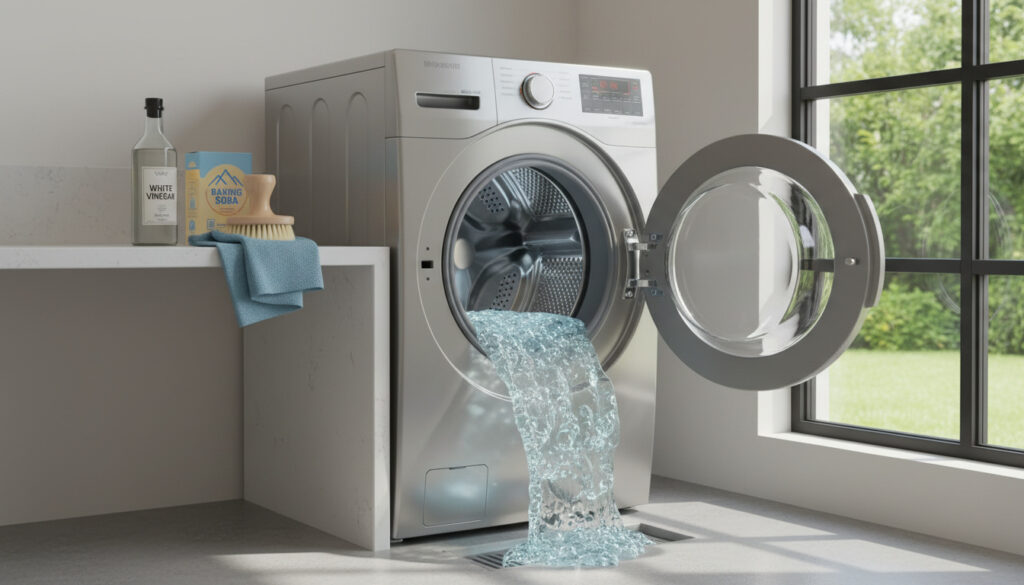
How to Clean a Washing Machine – Complete Guide
Regular maintenance of your washing machine prevents the buildup of mould, mildew and detergent residue that compromises cleaning performance. The rubber seal and filter require particular attention to eliminate odours and ensure hygienic operation. Manufacturers recommend specific protocols using household ingredients or commercial solutions to extend appliance lifespan.
Neglecting these components leads to trapped moisture and bacterial growth within the drum and gasket folds. Front-loading machines are especially susceptible due to their airtight seals. A consistent cleaning regimen addresses these vulnerabilities before they affect laundry quality.
Effective methods range from vinegar and baking soda applications to commercial cleaners and empty cycle protocols. Each approach targets specific contamination types while accommodating different machine specifications and user preferences.
How to Clean a Washing Machine with Vinegar and Baking Soda
- Run empty cycles monthly for maintenance
- Vinegar safe for most machines (check manual)
- Baking soda absorbs odours effectively
- Clean filter quarterly to avoid clogs
- Leave washer door open between cycles
- Wipe gasket after each use with dry cloth
- Use soft brush for cleaning gasket folds
| Method | Frequency | Time |
|---|---|---|
| Vinegar Cycle | Monthly | 1 hour |
| Baking Soda | As needed | 60 min hot |
| Filter Clean | Quarterly | 15 min |
| Seal Wipe | Weekly | 5 min |
| Bleach Deep Clean | Monthly | 30 min |
| Commercial Cleaner | Monthly | 1 hour |
A DIY vinegar solution combines one cup white vinegar, one cup water and approximately one teaspoon of dish soap in a spray bottle. This mixture deodorises and degreases rubber components effectively. Alternatively, Currys recommends pouring vinegar directly into the detergent drawer for internal cleaning.
Can You Run Your Washing Machine Empty to Clean It?
The Empty Cycle Method
Running the machine without laundry allows water and cleaning agents to reach all internal surfaces. Hotpoint confirms this approach eliminates accumulated detergent and fabric softener residues. The high water temperature sanitises the drum and internal plumbing.
Temperature Settings
Select the hottest available setting, typically 60°C or 90°C depending on the model. The heat breaks down biofilm and dissolves grease deposits that cold cycles miss. Some machines offer a specific Clean Washer Cycle that optimises water volumes and temperature for this purpose.
When to Use It
Perform monthly or every 30 wash cycles. Increase frequency if you notice musty odours or visible residue. This method works as either a standalone maintenance step or as preparation before using vinegar or commercial cleaners.
Always consult your appliance’s user manual for manufacturer-specific cleaning instructions. Some high-efficiency machines require particular cycle settings when running empty to prevent mechanical stress.
How to Clean a Washing Machine Filter
Locating the Filter
Beko guidance indicates that access panels vary by model. Front-loading machines typically position the filter behind a lower front panel kick plate. Top-loading machines may house the filter within the drum or at the back of the unit. Disconnect power before attempting access.
Removing Debris
Unscrew the filter cap slowly to release trapped water into a shallow tray. Extract visible objects such as hairpins, coins or fabric pieces. Rinse the filter mesh under running water until clear. Check the filter housing cavity for remaining obstructions.
Reassembly
Replace the filter by threading carefully to avoid cross-threading the plastic housing. Tighten firmly by hand only; tools risk cracking the component. Restore power and run a short rinse cycle to check for leaks.
How to Clean the Washing Machine Rubber Seal
Preparing the Gasket
Pull back the rubber folds to expose hidden debris. Remove foreign objects like socks or coins. Whirlpool recommends starting with a dry cloth to remove the first layer of surface debris before applying liquids.
Cleaning Solutions
Spray the vinegar solution liberally over the entire gasket and let it sit to allow the cleaner to work. For tough stains or mildew, use a diluted bleach solution: mix 3/4 cup (177 mL) of liquid chlorine bleach with 1 gallon (3.8 L) of warm tap water. All-purpose cleaners recommended for appliances can also be used with a sponge or nonabrasive plastic scrubbing pad.
Drying Techniques
Use a soft toothbrush to gently scrub all surfaces, paying special attention to folds where debris collects. Rinse thoroughly with a two-towel system working from top to bottom. Leave the door ajar to air dry completely.
Rinse the surface thoroughly after applying vinegar-based cleaners to avoid prolonged contact with rubber components. If you prefer to be extra cautious with rubber, you can skip the vinegar and use only the dish soap component.
After each laundry cycle, wipe down the gasket with a dry cloth. Every few loads, wipe with a damp cloth to combat soap scum. This takes thirty seconds and prevents major buildup.
How to Clean a Washing Machine Without Vinegar
Commercial Cleaner Options
All-purpose cleaners recommended for appliances effectively remove grime when applied with a sponge or nonabrasive plastic scrubbing pad. Some washing machines offer a Clean Washer Cycle that uses high water volumes with commercial washer cleaner to clean the machine’s interior.
Bleach Solutions
For tough stains or mildew, a diluted bleach solution proves effective. Mix 3/4 cup (177 mL) of liquid chlorine bleach with 1 gallon (3.8 L) of warm tap water. Wear rubber gloves when working with bleach, and always refer to manufacturer instructions for proper use.
Soda Crystals
In hard water areas, particularly within the UK, soda crystals provide an alkaline alternative for descaling and odour removal. Add directly to the drum and run the hottest available cycle. This method targets mineral deposits without acidic compounds.
What Is the Best Schedule for Washing Machine Maintenance?
- Week 1: Run vinegar drum cycle to break down detergent residue and deodorise.
- Week 2: Baking soda refresh on hottest cycle to absorb lingering odours.
- Monthly: Empty hot wash or commercial cleaner cycle to sanitise internal components.
- Quarterly: Deep clean filter to remove trapped debris and prevent drainage issues.
- As needed: Address visible mould on rubber seal with diluted bleach solution.
Maintaining your appliances seasonally ensures year-round efficiency. For climate control needs during warmer months, consider the Best Portable Air Conditioner options available.
Is It Safe to Clean a Washing Machine with Vinegar and Baking Soda?
Established Information
- Vinegar and baking soda are widely recommended by major brands including Hotpoint and Currys for safe, effective cleaning.
- Empty hot cycles are confirmed effective by manufacturers for killing bacteria and dissolving residue.
- Bleach solutions work for tough stains when properly diluted (3/4 cup per gallon).
Information Requiring Verification
- High-efficiency (HE) machine compatibility with vinegar requires manual consultation.
- Long-term effects of repeated vinegar exposure on rubber seals vary by compound quality.
- Specific warranty implications of DIY cleaning methods differ between manufacturers.
Why Does a Washing Machine Need Regular Cleaning?
Detergent residue accumulates in hidden compartments, creating a biofilm that harbours bacteria and mould spores. This buildup generates musty odours that transfer to clean laundry and can trigger allergic reactions in sensitive individuals.
Hard water deposits compound the problem by trapping minerals against heating elements and rubber seals. In the UK, where water hardness varies regionally, these mineral deposits accelerate wear on components. Regular cleaning prevents the mechanical strain caused by clogged filters and ensures efficient water drainage.
Maintaining the appliance according to manufacturer specifications preserves warranty coverage and extends operational lifespan. This diligence applies equally to other household equipment; for precise measurements when mixing cleaning solutions, refer to How Many Grams in a Cup. A well-maintained machine uses less energy per cycle and produces consistently cleaner results than a contaminated unit.
What Do Appliance Manufacturers Recommend?
“Inspect the rubber seal regularly and clean with a vinegar mix to prevent mould accumulation.”
— Hotpoint Maintenance Guidelines
“Place baking soda directly in the drum and run on the hottest cycle for effective odour removal.”
— Ideal Home Testing Protocol
“Pour vinegar into the detergent drawer for an internal clean that targets the soap dispenser and drum.”
— Currys Technical Advice
How to Keep Your Washing Machine Clean Long-Term
Consistent maintenance combines monthly empty hot cycles, quarterly filter cleaning, and weekly gasket wiping to prevent mould and odours. Choose between vinegar solutions, baking soda, or commercial cleaners based on your machine’s specifications and the type of residue present. Addressing these tasks systematically ensures hygienic laundry results and extends appliance longevity.
Frequently Asked Questions
How to clean a washing machine UK?
UK users should run monthly hot cycles with soda crystals to combat hard water deposits, clean the filter quarterly, and wipe the rubber seal weekly with a vinegar solution or mild detergent.
What is the best washing machine cleaner?
Commercial washer cleaners, vinegar and baking soda combinations, or diluted bleach solutions all prove effective. Select based on whether you need routine maintenance or mould remediation.
Can vinegar damage washing machine rubber?
Prolonged contact may degrade rubber over time. Always rinse thoroughly after application or use dish soap alone if concerned about seal integrity.
How often should I clean my washing machine filter?
Clean the filter every three months or quarterly to prevent blockages and drainage issues. Check more frequently if you wash pet bedding or heavy items that shed fibres.
Can I use baking soda alone to clean my washing machine?
Yes, add baking soda directly to the drum and run a hot cycle. It effectively absorbs odours and provides mild abrasion for removing surface grime.
What temperature kills bacteria in a washing machine?
Temperatures of 60°C or higher effectively kill most bacteria and dissolve detergent residue. Use the hottest setting available on your machine for cleaning cycles.
More related posts
 Lady Jane Grey: Nine Day Queen’s Execution & Last Words
 Liverpool FC vs Athletic Bilbao Timeline – Head-to-Head Record
 Grace Charis: Biography, Age, Height, Net Worth & Golf Career
 22 Inches in CM: Exact Conversion (55.88 cm) + Guide
 Wicked 2 Release Date – US, UK Theater and Digital Timeline
 Vatican Conclave Cardinals Pope Francis – 2025 Election Timeline and Results
 Mr Bates vs the Post Office: True Story & Latest Updates
 Mini Clubman for Sale – Used Prices and Buying Guide