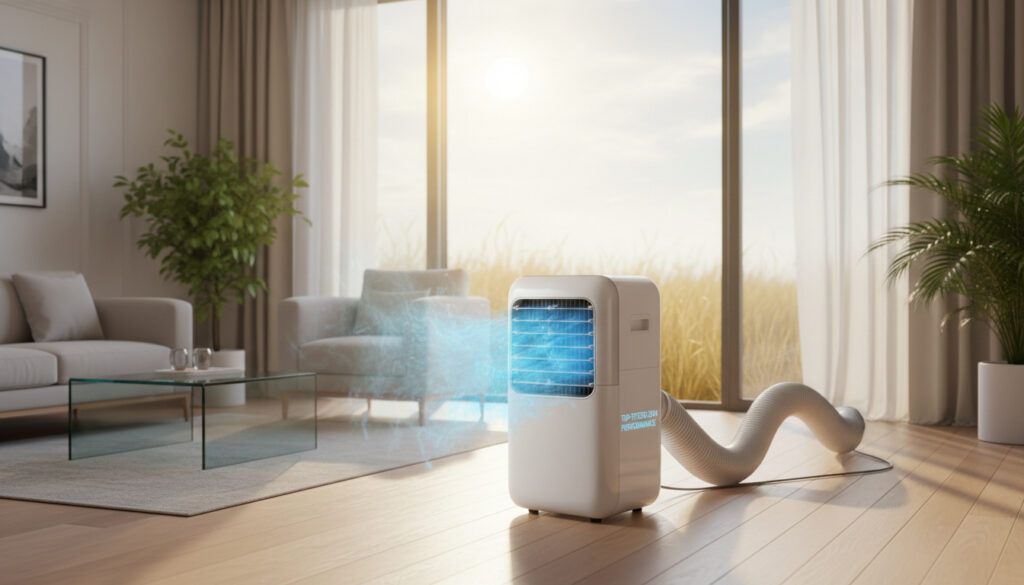
Best Portable Air Conditioner – Top 2024 Picks Tested
Portable air conditioners have evolved from inefficient stopgaps to sophisticated climate control systems. For renters prohibited from installing window units or homeowners seeking supplemental cooling, modern portable ACs offer removable installation and substantial cooling capacity without structural modifications. Independent testing conducted between 2024 and 2026 demonstrates that dual-hose inverter models now achieve efficiency ratings approaching window units while maintaining mobility.
The current market landscape reveals distinct performance tiers. The Midea Duo MAP12S1TBL dominates professional evaluations, capable of reducing an 80-degree Fahrenheit room by 10 to 20 degrees within ten minutes according to TechGearLab assessments. Meanwhile, specialized options like the Whynter ARC-14S address high-humidity environments, and compact units such as the Dreo AC319S target space-constrained urban apartments where every square foot matters.
What Is the Best Portable Air Conditioner in 2024?
Determining the optimal unit requires balancing cooling velocity, acoustic profiles, and smart functionality. Bob Vila and RTINGS.com identify the Midea Duo as the category standard, while Autoweek highlights the Whynter series for technological sophistication.
Best Overall
Midea Duo MAP12S1TBL
12,000 BTU dual-hose system with voice control, heating mode, and 5/5 performance ratings.
Best for Efficiency
Whynter ARC-1230WN
Wi-Fi enabled inverter technology with SEER 12.3 ratings and auto-swing vent distribution.
Best Compact Design
Dreo AC319S
Quiet operation optimized for Florida humidity tests with perfect portability scores.
Easiest Installation
Humhold
Stylish touchscreen interface with auto-drain hoses and rapid window kit deployment.
Key Performance Insights
- Dual-hose designs cool rooms approximately 20% faster than single-hose equivalents by preventing negative pressure infiltration.
- 12,000 BTU capacity adequately serves most residential rooms between 250 and 450 square feet.
- Energy Star certification indicates seasonal energy efficiency ratios (SEER) exceeding 10, reducing operating costs.
- Sleep modes achieving 44 decibels suit bedroom environments without disrupting rest cycles.
- Smart application integration enables remote scheduling and voice control through Alexa and Google Assistant.
- Heating modes extend operational utility into transitional seasons, providing year-round climate control.
| Model | BTU | Room Size (sq ft) | Noise (dB) | Price Range | Hose Type |
|---|---|---|---|---|---|
| Midea Duo MAP12S1TBL | 12,000 | 450-550 | 44-52 | ~$500-600 | Dual |
| Whynter ARC-1230WN | 12,000 | 400-500 | ~44 | ~$500-600 | Dual |
| Whynter ARC-14S | 14,000 | 500-600 | 45-53 | ~$600-650 | Dual |
| Dreo AC319S | ~10-12k | 250-350 | ~46-50 | ~$400-450 | Single |
| Humhold | ~10,000 | 200-300 | ~45-48 | ~$350-400 | Single |
| Hisense HAP0824TWD | 8,000 | 150-250 | 48-52 | ~$300-400 | Dual |
| Shinco SPF1-08C | 8,000 | 150-250 | 50-55 | ~$250-350 | Single |
| Costway 22783 | 8,000-10k | 150-250 | 50-55 | ~$250-300 | Single |
What Size Portable Air Conditioner Do I Need?
Selecting appropriate capacity requires calculating square footage and adjusting for environmental variables. Standard guidelines suggest 20 BTU per square foot for rooms with eight-foot ceilings, though this baseline shifts under specific conditions.
Calculating Baseline Requirements
For spaces between 150 and 250 square feet, 8,000 to 10,000 BTU units provide adequate cooling. Medium rooms spanning 250 to 350 square feet require 10,000 to 12,000 BTU capacity, while larger areas up to 550 square feet necessitate 12,000 to 14,000 BTU systems. Video testing demonstrates that a properly sized Midea 12,000 BTU model reduces temperatures 7.9 degrees faster than competing 14,000 BTU single-hose alternatives.
Kitchens and home offices require 10-20% additional BTU capacity due to heat-generating appliances and occupancy loads. South-facing rooms with significant solar gain similarly demand upgraded specifications.
Architectural Considerations
Ceiling height significantly impacts calculation accuracy. Rooms with cathedral ceilings or lofts may require 30% additional capacity. Conversely, shaded north-facing bedrooms might perform adequately with slightly undersized units. The TechGearLab evaluations emphasize that oversizing leads to short-cycling and humidity retention, while undersizing results in continuous operation and premature wear.
Are Portable Air Conditioners Actually Effective?
Skepticism regarding portable AC performance stems from early single-hose designs that created negative pressure, drawing warm exterior air through gaps around windows and doors. Contemporary dual-hose engineering eliminates this inefficiency.
High-Humidity Performance
In Florida testing environments, the Dreo AC319S maintained comfortable conditions despite extreme humidity levels. Dual-hose units like the Midea Duo and Whynter series excel in muggy climates by isolating intake and exhaust air streams. Hisense models provide reliable humidity control, though they generally underperform compared to the category leaders.
Energy Consumption Realities
Energy Star certified dual-hose units typically operate at SEER ratings between 10 and 12.3. This efficiency translates to measurable utility savings compared to single-hose alternatives, particularly during extended cooling seasons. Application-based monitoring systems allow users to optimize scheduling, reducing unnecessary operation during unoccupied hours.
What Makes a Portable AC Quiet and Efficient?
Acoustic comfort and energy efficiency depend primarily on hose configuration and compressor technology. Understanding these distinctions enables informed purchasing decisions beyond basic BTU ratings.
Dual-hose models isolate interior air from exterior pressure differentials. By pulling intake air through a separate hose rather than conditioning interior air, these systems prevent the infiltration of unconditioned outdoor air through structural gaps.
Inverter Technology and SEER Ratings
The Whynter ARC-1230WN utilizes inverter compressors that modulate speed rather than cycling fully on or off, achieving SEER 12.3 ratings. This variable capacity reduces energy consumption during partial load conditions while minimizing temperature fluctuations. Traditional fixed-speed compressors consume more electricity during startup phases.
Noise Characteristics
Acoustic performance varies significantly between models. The Whynter ARC-1230WN operates at approximately 44 decibels in sleep modes, comparable to library ambience. The Dreo and Humhold models similarly prioritize quiet operation, scoring 4 to 4.5 out of 5 in noise evaluations. Standard portable units typically generate 50 to 60 decibels.
Even premium portable units produce more audible output than window-mounted alternatives. Light sleepers should prioritize models with dedicated sleep modes and place units away from bedside locations.
How Do You Vent and Set Up a Portable AC?
Proper installation directly impacts cooling efficiency and prevents moisture damage. All compressor-based portable air conditioners require exhaust venting to exterior spaces.
Window Kit Configuration
Most units include adjustable sliding panels accommodating windows between 24 and 48 inches. Installation typically requires five to ten minutes without specialized tools. Low-profile kits suit apartment applications where aesthetic discretion or landlord restrictions apply. The Humhold and Costway models emphasize tool-free assembly for temporary seasonal deployment.
Hose Management and Drainage
Dual-hose systems require two separate window connections, while single-hose units need only exhaust ports. Auto-evaporation technology found in Whynter and Humhold models minimizes manual condensate tank emptying, redirecting moisture through exhaust hoses. In high-humidity environments, occasional gravity draining may still prove necessary.
How Has Portable Air Conditioning Technology Evolved?
The trajectory of portable cooling reflects broader HVAC innovation, particularly regarding refrigerant chemistry and control systems.
- : Engineers develop the first self-contained portable cooling units using heavy rotary compressors and CFC refrigerants.
- : Inverter technology enters the portable market, enabling variable-speed compressors that reduce energy consumption by 30-50% compared to fixed-speed predecessors.
- : Dual-hose designs achieve market dominance as testing reveals their 20% efficiency advantage over single-hose configurations in controlled environments.
- : Smart app integration and voice control become standard features across mid-range and premium models, allowing geofencing and energy monitoring.
- : Manufacturers anticipate widespread adoption of R32 refrigerant, which offers lower global warming potential than previous hydrofluorocarbon compounds.
What Facts Are Certain About Portable AC Performance?
Distinguishing verified capabilities from marketing claims helps consumers avoid disappointment. Laboratory testing confirms specific performance metrics while leaving other variables dependent on installation context.
| Established Information | Information Requiring Context |
|---|---|
| All compressor-based portable ACs require exterior exhaust venting; ductless evaporation models function only in arid climates. | Precise annual operating costs depend on regional electricity rates, cooling degree days, and thermostat setpoints. |
| Dual-hose units prevent negative pressure infiltration, maintaining higher efficiency in sealed buildings. | Long-term reliability data for smart Wi-Fi modules remains limited to 3-5 year observation periods. |
| SEER ratings above 10 indicate efficient inverter technology suitable for daily operation. | Filter replacement intervals vary significantly based on local dust conditions and pet dander levels. |
| Standard sizing requires 20 BTU per square foot for residential applications with standard ceiling heights. | Actual cooling speed depends on ambient temperature, humidity, and insulation quality beyond manufacturer specifications. |
How Does Portable Air Conditioning Technology Work?
Portable air conditioners operate on vapor-compression refrigeration principles identical to window units and central systems. A sealed refrigerant loop absorbs interior heat through an evaporator coil, compresses the heated gas, and releases thermal energy through a condenser coil to exterior air. Understanding these mechanical systems, much like interpreting Car Dashboard Symbols and Meanings – Complete Guide to Warnings, requires attention to standardized operational indicators.
Single-hose configurations draw interior air across the condenser, creating negative pressure that pulls unconditioned outdoor air through structural gaps. Dual-hose designs isolate this process, drawing condenser air from outside through a dedicated intake hose. This isolation prevents the reintroduction of heat and humidity, explaining the measured performance advantages in RTINGS.com evaluations.
What Do Testing Laboratories and Energy Authorities Report?
Independent validation provides crucial perspective beyond manufacturer specifications. Energy efficiency standards and reliability assessments offer objective benchmarks for comparison.
Room air conditioners including portable units average approximately 10 EER, though recent inverter models achieve significantly higher seasonal efficiency ratings.
Energy.gov Appliance Standards
Dual-hose designs demonstrate superior performance in high-temperature environments by eliminating the negative pressure issues inherent in single-hose systems.
Technical Analysis, TechGearLab
Consumer Reports reliability surveys indicate that Frigidaire and Honeywell maintain strong service records, though comprehensive 2024 rankings remain pending publication. Bob Vila testing corroborates the Midea Duo’s cooling velocity advantages in controlled room simulations.
Is a Portable AC the Right Investment for Your Home?
Portable air conditioners represent optimal solutions for specific residential constraints. Renters facing window restrictions, homeowners requiring supplemental cooling for isolated zones, and regions with brief cooling seasons benefit most from these mobile systems. While window units maintain superior efficiency per BTU, the flexibility of portable configurations justifies the modest performance trade-off for many users. Those seeking to understand mechanical system indicators across different contexts might also reference Car Dashboard Symbols and Meanings – What Red, Yellow, Green Mean for comparative diagnostic frameworks.
Common Questions About Portable Air Conditioning
How much does a portable air conditioner cost?
Quality units range from approximately $300 for basic 8,000 BTU models to $650 for premium 14,000 BTU dual-hose systems with smart controls. Mid-range options with adequate features for most apartments typically cost $400-$500.
How much electricity does a portable AC use?
Energy consumption varies by capacity and efficiency rating. A 12,000 BTU Energy Star model typically consumes 900-1,200 watts during operation, costing roughly $0.10-$0.20 per hour depending on local electricity rates.
Can a portable AC cool multiple connected rooms?
Portable units effectively cool only the room in which they operate. Open floor plans may allow limited air distribution to adjacent spaces, but closed doors block circulation. Multiple units remain necessary for whole-apartment cooling.
How frequently must the condensate tank be emptied?
Auto-evaporation models redirect moisture through exhaust hoses during cooling mode, requiring manual draining only in high-humidity conditions or when using dehumidifier-only settings. Traditional units may need daily emptying in muggy climates.
Do these units require 220V outlets or dedicated circuits?
Most portable air conditioners operate on standard 115V household circuits. Units exceeding 14,000 BTU may require dedicated 20-amp circuits to prevent breaker tripping during compressor startup.
What maintenance does a portable AC require?
Monthly filter cleaning maintains airflow and efficiency. Annual deep cleaning of condenser coils prevents mold accumulation. End-of-season storage requires draining all moisture and protecting hoses from dust infiltration.
More related posts
 Translate English to Nepali: Tools and Tips for Accuracy
 Shane Filan: Bankruptcy, Net Worth, and Family Life (2025)
 Coin Master Free Spins: Daily Links & How to Claim
 Lady Jane Grey: Nine Day Queen’s Execution & Last Words
 F1 Qualifying Time Today: Start Times & TV Schedule (2026)
 Mary Berry Yorkshire Puddings – Scaled Recipes for 2, 4 or 6
 Mini Clubman for Sale – Used Prices and Buying Guide
 Best Home Insurance UK 2026: Top Providers Compared