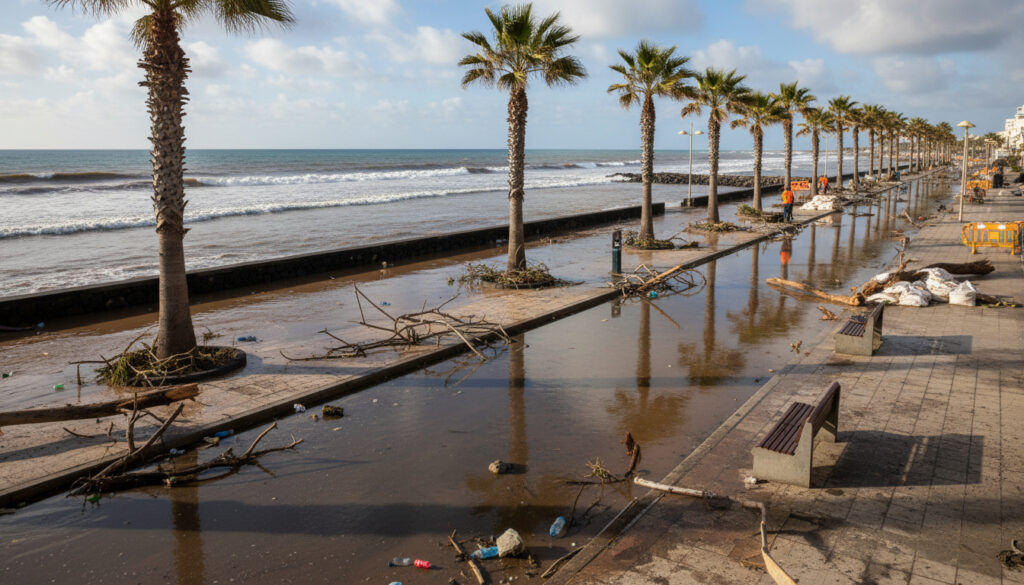
Lanzarote Floods Costa Teguise – Damage and Recovery Updates
Storm Olivier unleashed exceptional rainfall across Lanzarote on April 12, 2025, transforming the arid eastern coast into a hazardous flood zone within hours. Approximately one month’s worth of precipitation fell on Costa Teguise and surrounding municipalities in a single afternoon, overwhelming drainage systems and triggering a major emergency response.
The deluge struck without warning, peaking between 1 PM and 3 PM, with Tahiche recording over 100 litres per square metre and central Costa Teguise registering 62 litres per square metre. Authorities declared a state of emergency as streets submerged, underpasses flooded, and hotels lost electricity across the island’s primary tourist corridor.
While official response teams have since restored basic services and reopened critical infrastructure, extended recovery operations continue to address damaged homes, debris-strewn beaches, and economic disruption ahead of the crucial Easter tourism period.
What Caused the Floods in Costa Teguise, Lanzarote?
April 12, 2025
Storm Olivier (Heavy Rainfall)
Costa Teguise, Arrecife, San Bartolomé
222-300 reported incidents, 95 damaged properties
The meteorological event was driven by Storm Olivier, which delivered intense precipitation concentrated during a two-hour window. Monitoring data from the Met Office Rainfall Radar would typically track such Atlantic weather systems, though the rapid intensification caught many residents and tourists unprepared.
- Exceptional Intensity: Tahiche received over 100 litres per square metre, while Teguise recorded upwards of 90 litres per square metre.
- Rapid Onset: The majority of rainfall occurred between 1 PM and 3 PM, leaving minimal time for preventive measures.
- Widespread Impact: Central Costa Teguise, Las Cucharas beach, and Altavista all recorded 62 litres per square metre.
- Zero Fatalities: Despite the sudden severity, no deaths were reported from the flooding event.
- Economic Concentration: Damage focused on Arrecife’s commercial and residential districts, with 95 homes and businesses affected.
- Infrastructure Strain: Road closures affected the LZ-20 bridge to San Bartolomé and routes through Tahiche and Costa Teguise.
| Fact | Details |
|---|---|
| Storm Name | Storm Olivier |
| Event Date | April 12, 2025 |
| Peak Rainfall (Tahiche) | 100+ litres/m² |
| Peak Rainfall (Costa Teguise) | 62 litres/m² |
| Initial Emergency Lifted | April 13, 7:00 AM |
| Reported Incidents | 222-300 |
| Properties Damaged (Arrecife) | 95 homes and businesses |
| Fatalities | 0 confirmed |
| Emergency Personnel Deployed | 100+ in Arrecife alone |
| Beach Amenity Recovery | 1-2 months estimated |
What Damage and Impact Did the Floods Cause?
Physical Infrastructure and Property
The eastern coast sustained concentrated damage where drainage infrastructure proved inadequate for the volume of water. Blocked roads and submerged underpasses isolated neighbourhoods, while power outages left multiple hotels without electricity. Municipal records document 95 damaged homes and commercial establishments within Arrecife’s city limits.
The LZ-20 bridge connecting to San Bartolomé and major routes through Tahiche remain vulnerable to further weather disruptions. Authorities have warned that additional rainfall could delay recovery schedules and compound existing structural damage.
Tourism and Beach Amenities
Visual documentation reveals beaches stripped of essential amenities, with sunbeds and hospitality equipment washed away or damaged beyond immediate repair. The timing proved particularly damaging, occurring just days before the Easter holiday rush when occupancy rates typically peak. Industry observers note that unlike structural repairs, beach infrastructure requires specialised logistics and importation of replacement equipment, extending the recovery window.
Economic Disruption
Businesses faced immediate revenue loss during the critical pre-Easter period, while hotels undertook accelerated refurbishment schedules to prepare for returning visitors. The concentration of damage in Costa Teguise—a purpose-built tourism resort—heightened concerns about long-term reputational impact on Lanzarote’s year-round destination status.
What Is the Latest on Recovery and Government Response?
Emergency Declarations and Extensions
Lanzarote’s Cabildo extended the state of emergency beyond the initial lifting on April 13, citing the complexity and hazardous nature of remaining recovery works. Arrecife’s mayor, Yonathan de León, formally requested that the national government declare the city a catastrophic zone, which would unlock additional emergency aid channels for affected families and businesses.
The UK Foreign Commonwealth and Office revised travel guidance on April 13, 2025, specifically advising travellers to heed local authority instructions and monitor weather updates. Ireland’s Department of Foreign Affairs issued complementary warnings regarding Spain’s susceptibility to extreme weather events.
Cleanup Operations and Personnel Deployment
Emergency services mobilised more than 100 personnel within Arrecife for round-the-clock cleanup and assistance operations. The response followed a “zone by zone” methodology over the initial 72 hours, prioritising critical infrastructure and residential access routes before addressing secondary damage.
Transportation Resumption
Lanzarote Airport resumed normal operations following initial interruptions, with flights now running on schedule. Road crews have cleared primary routes, though drivers should anticipate residual debris and temporary traffic management systems in affected districts.
Officials estimate beach amenities will require one to two months for full restoration. Some hotels utilised the disruption period to accelerate planned refurbishment works, potentially minimising long-term availability impacts.
When Did the Floods Occur and How Did the Response Unfold?
- Heavy rainfall begins across eastern Lanzarote as Storm Olivier makes landfall.
- Peak precipitation recorded—Tahiche exceeds 100 litres/m², Costa Teguise receives 62 litres/m².
- Flash flooding submerges underpasses, blocks roads including LZ-20 bridge, and cuts power to hotels.
- Island-wide state of emergency declared; 222-300 incidents reported.
- Initial island-wide emergency status lifted, though Cabildo extends local emergency measures.
- UK Foreign Office revises travel guidance; Ireland issues weather warnings for Spain.
- Major 72-hour cleanup operation begins with 100+ personnel deployed in Arrecife.
- Airport operations normalised; zone-by-zone recovery continues; catastrophic zone request submitted.
What Has Been Confirmed and What Remains Uncertain?
Established Facts
- Storm Olivier caused the flooding on April 12, 2025
- No fatalities occurred despite widespread damage
- 95 properties damaged in Arrecife specifically
- 222-300 total incidents reported across the island
- Rainfall peaked at 100+ litres/m² in Tahiche
- Emergency services deployed 100+ personnel
- Beach amenities require 1-2 months for restoration
Information Pending
- Total monetary cost of damage remains uncalculated
- Complete timeline for infrastructure repairs unspecified
- Long-term tourism booking impact not yet quantified
- Specific allocation of catastrophic zone funding undetermined
- Full assessment of submerged electrical systems incomplete
Why Did This Weather Event Cause Such Severe Disruption?
Lanzarote’s infrastructure has evolved to manage arid conditions and occasional light precipitation, not the concentrated volume delivered by Storm Olivier. The island’s volcanic terrain and limited natural drainage channels exacerbated the flash flooding, particularly in developed coastal areas like Costa Teguise where impermeable surfaces dominate.
The event’s timing compounded its impact. April represents a critical transitional period when winter tourism declines and Easter bookings surge. Industry observers expressed concern that images of submerged streets and debris-covered beaches could deter the spring holiday traffic essential to the island’s annual revenue cycle.
Climate specialists note that while individual weather events cannot be attributed solely to climate change, the Canary Islands have experienced increasingly erratic precipitation patterns. The region’s preparedness protocols, designed for gradual drought management rather than flash flood response, faced an unprecedented stress test during this emergency.
What Have Officials Said About the Emergency?
The situation requires us to request the declaration of Arrecife as a catastrophic zone to ensure our families and businesses receive the emergency aid they need to recover.
— Yonathan de León, Mayor of Arrecife
Travellers should heed the advice of local authorities and monitor weather updates during their stay in the Canary Islands.
— UK Foreign Commonwealth and Office Travel Guidance, April 13, 2025
What Is the Current Situation in Costa Teguise?
Costa Teguise has transitioned from emergency response to sustained recovery operations. While immediate hazards have cleared and transportation links restored, visitors should expect limited beach services and ongoing construction activity through the late spring. Hotels have largely reopened, though some continue renovation work initiated during the closure period. Travellers planning visits should verify specific amenity availability directly with accommodations and consider P&O Cruise Personaliser or similar platforms for updated itinerary information if visiting via cruise connections.
Frequently Asked Questions
Are the floods still ongoing in Costa Teguise?
No. The active flooding subsided by April 13, 2025. However, recovery operations and cleanup activities continue in affected areas.
Is it safe to travel to Costa Teguise now?
Yes. The UK Foreign Office has not advised against travel, though visitors should monitor local weather updates and expect limited beach amenities for one to two months.
Which specific areas were worst hit?
Eastern coastal municipalities including Arrecife, Costa Teguise, and San Bartolomé sustained the most damage, particularly Tahiche and Las Cucharas beach.
Were any flights cancelled during the floods?
Lanzarote Airport experienced interruptions during the peak of the storm but resumed normal operations by April 13, with schedules now running as normal.
How can tourists help recovery efforts?
Visitors should respect cordoned recovery zones, support local businesses in affected areas, and follow guidance from the Cabildo de Lanzarote regarding access restrictions.
What caused such heavy rain in an arid region?
Storm Olivier, an Atlantic weather system, delivered exceptional rainfall concentrated in a two-hour period, overwhelming infrastructure designed for minimal precipitation.
More related posts
 How to Make an Omelette: Simple Steps, Tips, and Milk vs. Water
 The Tourist (TV Series) – Complete Guide to Plot, Cast and Seasons
 Met Office Weather Cardiff: Forecasts & Accuracy Guide
 Adriana Lima: Biography, Children & Career Facts
 Birmingham vs Derby County: H2H, Prediction, Stats & Tickets
 Class Charts Parent Login – Step-by-Step Guide
 Translate English to Gujarati – Tools for Typing, Voice, PDF
 UK Amber Weather Warning Thunderstorms: Met Office Alerts