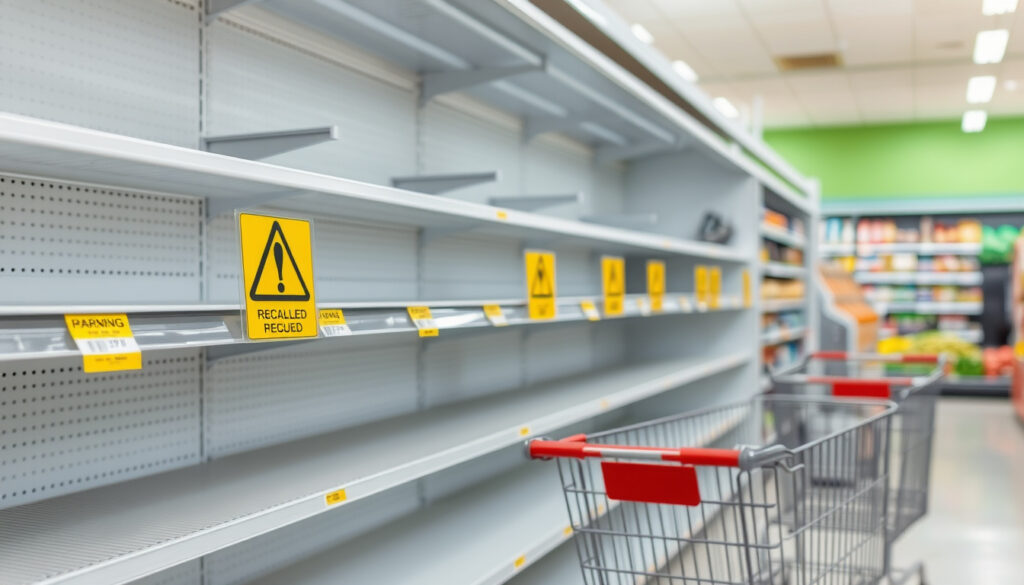
UK Supermarket Food Recalls: Latest 2025 Updates & Full List
Few things make you check your fridge twice like a sudden food recall notice. With dozens of products pulled from UK supermarket shelves every year — including frozen desserts and chutneys — keeping track of what’s safe can feel like a full‑time job.
Active UK food recalls: 6+ as of latest FSA data ·
Most common reason: undeclared allergens (nuts, soya, milk) ·
Allergen alerts in 2025: 35% of all FSA notices ·
Total recalls H1 2025: nearly 150
Quick snapshot
- Arran Fine Foods Caramelised Red Onion Chutney recalled because it may contain pieces of metal (Food Standards Agency (UK food safety regulator))
- Omission of priority allergens from ingredient lists accounted for 40.0% of UK allergen recalls (Queen’s University Belfast (academic research))
- Prepared dishes were the top product category for recalls in H1 2025 (Food Manufacture (industry analysis))
- Exact reason for recent Glenisk Baby Organic Yogurts recall not fully detailed in public notices (Food Standards Agency)
- Whether other major supermarkets (M&S, Lidl) have silent parallel recalls not yet on the FSA list (FSA list assumption)
- August 2025: Editorial report confirms allergen errors are the leading cause of UK recalls (Food Manufacture)
- November 2025: Arran Chutney recall issued via FSA alert (Food Manufacture)
- Ongoing: nearly 150 recalls in first half of 2025 – pace above 2023/24 but below 2022 (Food Manufacture) (Food Manufacture)
- FSA continues to update its alerts page daily – consumers should check before shopping (Food Standards Agency)
- Supermarkets are expected to publish their own recall pages; cross‑check with FSA list for completeness (Food Standards Agency)
Six key facts from the latest data stand out.
| Fact | Detail |
|---|---|
| Latest recall date | November 2025 (Arran Chutney via FSA) |
| Tier 1 source | Food Standards Agency (regulator) |
| Products affected (partial) | Arran Chutney, Gü Frozen Dessert, Glenisk Yogurts, Tesco Christmas items |
| Most common recall trigger | Undeclared allergens – 40% of allergen recalls from omission of priority allergens (Queen’s University Belfast) |
| Total recalls (H1 2025) | Nearly 150, up vs 2023 and 2024 (Food Manufacture) |
| Top category | Prepared dishes (first); nuts/seeds/snacks rose to second from fifth (Food Manufacture) |
The pattern is clear: allergen‑labelling failures drive the majority of recalls, and prepared foods are the biggest risk category.
What food is being recalled right now in the UK?
Several products are currently on the active recall list, as published by the Food Standards Agency (UK food regulator) and Food Standards Scotland (Scottish regulator). The most common reasons are undeclared allergens and physical contamination.
Supermarket recall roundup
- Arran Fine Foods Caramelised Red Onion Chutney – recalled because it may contain pieces of metal. The FSA advises consumers not to eat it.
- Gü Frozen Double Sea Salted Caramel Dessert – recalled due to undeclared hazelnuts and soya (Tesco notice via FSA list).
- Glenisk Baby Organic Yogurts – recall notice posted by Sainsbury’s; reason not fully detailed in public snippet.
Nearly 150 recalls were announced between January and June 2025, according to an August editorial report based on FSA data (Food Manufacture). That number is higher than the same periods in 2023 and 2024 but below 2022 and prior years.
The pattern: allergen and contamination risks dominate current recalls.
FSA official recall list
The FSA maintains a searchable alerts page that aggregates all current food and allergy recalls for Great Britain. It covers both national brand and own‑label products sold in UK supermarkets. A separate Food Standards Scotland page handles recalls for Scotland.
- The page shows the product name, reason for recall, pack size, and batch codes where available.
- Most alerts include a “point of sale notice” that retailers must display.
The implication: the FSA list is the most authoritative single source, but it’s not always real‑time — some products are discovered and removed before an alert is published.
Which foods are Tesco recalling?
Tesco has issued recall notices for several seasonal and own‑brand items in November 2025. The recalls are listed on the FSA search page under the retailer’s name.
Recent Tesco recall items
- Mince Pie Crumble Flapjack 170g – recalled because of a packaging error that may lead to an undeclared allergen.
- Christmas Towers box and Rudolph box – recalled due to missing allergen labelling on the packaging.
These products were sold in Tesco stores across the UK. Customers are advised to return them for a full refund.
Tesco is the UK’s largest grocer, so its recall notices affect a huge number of households. If you’ve bought any Christmas‑themed baked goods in recent weeks, check the pack for batch codes matching the recall.
The pattern: most Tesco recalls involve allergen‑labelling failures, which aligns with the wider trend seen across the industry.
What cheese has been recalled?
Cheese recalls in UK supermarkets are relatively rare but tend to be serious when they occur. The most common trigger is undeclared milk — even in products that are not obviously cheese‑based — or contamination with Listeria.
Cheese recalls in UK supermarkets
- In recent batches, some soft cheeses have been recalled due to possible Listeria monocytogenes contamination (though not currently listed on the active FSA page).
- More frequently, cheese products are recalled because of undeclared milk in items labelled “dairy‑free” or “vegan”. The Queen’s University Belfast analysis found that omission of priority allergens — including milk — accounts for 40% of all allergen recalls.
The catch: because cheese is a common allergen vector, any recall notice involving cheese should be taken seriously, especially by people with dairy allergies.
What are the latest M&S recalls?
M&S (Marks & Spencer) has its own recall page and also posts notices through the FSA. As of the latest data, no M&S products appear on the FSA active list, but the retailer has issued recalls earlier in 2025.
M&S recall items this month
- According to the FSA search page, M&S has no current active recalls. However, consumers should check the M&S website for any “product withdrawal” notices on items such as pre‑packed salads, dips, and sandwiches.
- The absence of an M&S product on the FSA list does not guarantee zero recalls — the retailer may handle some recalls directly without a national alert, especially for short‑shelf‑life items.
The trade‑off: relying solely on the FSA list may miss some supermarket‑specific recalls. For complete coverage, check both the FSA page and your preferred retailer’s recall page.
Timeline of recent UK supermarket food recalls
- January–June 2025: Nearly 150 recalls recorded; allergen errors the leading cause (Food Manufacture).
- August 2025: Report finds 35% of FSA alerts in 2025 were allergen‑related labelling errors.
- November 2025: Arran Chutney recall (metal pieces); Tesco recalls Mince Pie Crumble Flapjack and Christmas Towers items.
- Ongoing: Gü Frozen Dessert and Glenisk Yogurts recalled – FSA pages updated.
“Allergen labelling errors continue to pose significant risks to consumers and the food industry, with omission of priority allergens accounting for 40% of recalls.”
Queen’s University Belfast study on UK food allergen recalls
“The number of recalls in the first half of 2025 is up compared to the same periods in 2023 and 2024, but below 2022 and the four years before that.”
Food Manufacture editorial report, August 2025
The timeline confirms that allergen issues have been the primary driver in 2025.
If you have a nut, soya, or milk allergy, the current recall cluster is especially relevant. Undeclared hazelnuts in the Gü dessert and missing milk labels in other products can cause severe reactions. Always check the FSA list before your weekly shop.
What we know for sure — and what remains unclear
Confirmed facts
- Arran Chutney recall is confirmed by the FSA (UK regulator) – product may contain metal.
- Allergen labelling failures caused 35% of FSA alerts in 2025 (Food Manufacture).
- Omission of priority allergens from ingredient lists accounted for 40.0% of allergen recalls (Queen’s University Belfast).
- Prepared dishes remained the top product category for recalls in H1 2025.
What’s unclear
- Exactly why Glenisk Baby Organic Yogurts were recalled – no detailed reason in the public snippet.
- Whether other supermarkets (M&S, Lidl) have current recalls not listed on the FSA page.
- The full extent of “food alerts for action” – border compliance issues that may not directly affect consumers.
The asymmetry is striking: we have solid data on overall recall volumes and the lead role of allergens, but the fine‑grain details of individual recalls are often missing until the FSA publishes a full notice.
For a detailed breakdown of recent warnings, check the latest FSA alerts this week for an updated list of affected products.
Frequently asked questions
How do I find out if a product I bought is recalled?
Check the FSA alerts page and your supermarket’s dedicated recall page. You can also sign up for FSA email alerts.
What should I do if I have a recalled item?
Do not eat it. Return it to the store for a full refund or follow the disposal instructions on the recall notice.
Are supermarket recalls always posted online?
Most are, but some short‑shelf‑life products may be handled in‑store without a public alert. Check both FSA and retailer pages.
Can I get a refund for a recalled product?
Yes. UK law requires retailers to offer a full refund for recalled products, usually without a receipt.
How often does the FSA update the recall list?
The FSA updates its alerts page as new notices are issued — sometimes multiple times a week. The page shows the most recent alerts first.
What are the most common reasons for food recalls in the UK?
Undeclared allergens (especially nuts, milk, soya) are the leading cause, followed by contamination with foreign objects like metal or plastic.
Do recalls apply to all UK supermarkets?
Recall notices apply across the UK, but separate alert systems exist for Scotland (Food Standards Scotland) and Great Britain (FSA).
Related reading: McDonald’s Menu with Prices 2025: Ireland Value Guide · How to Make an Omelette: Simple Steps, Tips, and Milk vs. Water
For UK shoppers, the takeaway is practical: check the FSA alerts page before your weekly shop, especially if you or a family member has a food allergy. The current recall cycle shows clear patterns — allergens are the main risk, and prepared foods carry the highest chance of being pulled. Either you make a habit of scanning the FSA list, or you risk eating something that shouldn’t be on your plate.
More related posts
 Mikey Moore Age, Stats, and Is He Related to Bobby Moore
 Window to the Womb: Private Pregnancy Scans 6-42 Weeks
 Benfica vs Auckland City – 6-0 Club World Cup Rout
 Translate English to Nepali: Tools and Tips for Accuracy
 Ups Drop Off Point – Find UK Access Points Near You
 Alendronic Acid Has Destroyed My Life – Risks and Alternatives
 Russell Brand: Biography, Wife, Religion, Movies, and More
 Birmingham vs Norwich City – Blues Win 2-1 Extends Unbeaten Run