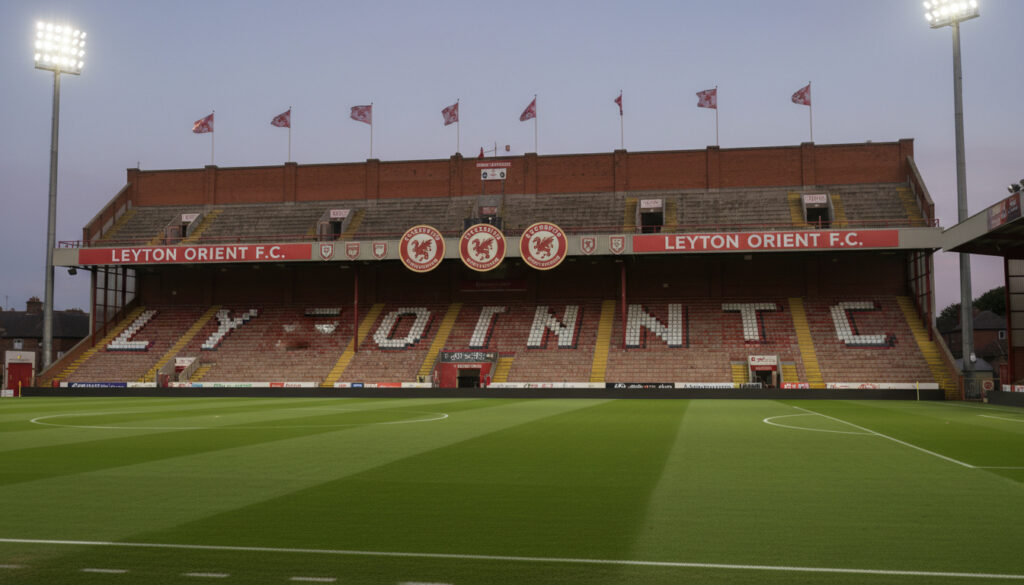
Leyton Orient F.C. – History League and Ownership Facts
Leyton Orient Football Club, known to supporters as “the O’s,” stands as the second oldest professional football club in London. Founded in 1881 as Glyn Cricket Club before converting to association football in 1888, the organization has navigated over 140 years of English football history, surviving financial collapses, multiple relegations, and dramatic ownership changes. Currently competing in EFL League One following their 2023 championship campaign, the club operates from Brisbane Road, a ground it has called home since 1937.
The East London side’s trajectory spans from a solitary season in the First Division during the 1960s to a historic fall into non-league football in 2017. Recent years have brought renewed stability under American ownership, with the club now targeting sustainable progression toward the EFL Championship through a comprehensive six-point development plan announced in 2025.
What defines Leyton Orient F.C. today?
- Second oldest professional football club in London, behind only Fulham
- Promoted to current EFL League One status as 2022–23 League Two champions
- Acquired by US consortium led by David Gandler in April 2025
- Resident at Brisbane Road since 1937, following four previous grounds
- Victorious in the 2018–19 FA Trophy during their National League campaign
- Experienced only one season in English football’s top tier (1961–62)
- Recognized by the all-red home kit and “the O’s” nickname
| Fact | Details |
|---|---|
| Full Name | Leyton Orient Football Club |
| Founded | 1881 (as Glyn Cricket Club) |
| Nickname | The O’s |
| Home Colors | All red |
| Stadium | Breyer Group Stadium (Brisbane Road) |
| Current League | EFL League One |
| Highest League Finish | 22nd (Division One, 1963) |
| FA Cup Best Performance | Semi-final (1977–78) |
| Current Majority Owner | David Gandler (78.55% via GSG LOFC Limited) |
| Chairman | Nigel Travis (transitional period) |
| Previous Grounds | Glyn Road, Whittles Athletic Ground, Millfields Road, Lea Bridge Speedway Stadium |
How has Leyton Orient’s ownership structure changed?
The Becchetti Era and Decline (2014–2017)
Italian businessman Francesco Becchetti acquired the club in 2014, initiating a period of severe instability. Under his tenure, the club faced significant financial problems including unpaid taxes, alongside 11 managerial appointments. Two relegations followed, culminating in the club’s removal from the Football League in 2017 after 112 years of continuous membership.
The Travis Stabilization (2017–2025)
Nigel Travis assumed operational control in 2017, appointing Justin Edinburgh as manager. This leadership pairing restored competitive stability, delivering promotion back to the Football League as National League champions in 2018–19. Travis remained chairman throughout the subsequent recovery period, overseeing the 2023 League Two title success under Richie Wellens.
The Gandler Takeover (2025–Present)
On 25 April 2025, David Gandler completed a 100% takeover of the club through a US consortium. The New York-based businessman holds 78.55% majority ownership via GSG LOFC Limited. Chairman Nigel Travis confirmed he would remain in post during the transitional period, with CEO Mark Devlin continuing in his executive role.
The new ownership announced a six-point strategy encompassing construction of a new stadium in Waltham Forest, upgraded training facilities, expanded women’s team support, youth academy growth, enhanced Leyton Orient Trust engagement, and sustainable pursuit of EFL Championship promotion.
What are Leyton Orient’s competitive achievements?
Early Football League Entry
The club entered the Football League in 1905 as Clapton Orient. Prior to settling at Brisbane Road in 1937, the club occupied Glyn Road (1884–1896), Whittles Athletic Ground (1896–1900), Millfields Road (1900–1930), and Lea Bridge Speedway Stadium (1930–1937).
The Solitary Top Flight Campaign
Leyton Orient’s only experience of top-tier football came during the 1961–62 season. They spent just one season in the First Division, recording their highest ever league position of 22nd in Division One during the 1962–63 campaign.
Cup Runs and Playoff Finals
The 1977–78 season brought an FA Cup Semi-Final appearance, the club’s deepest run in the competition. More recently, Orient reached the 2013–14 League One Play-Off Final at Wembley, losing to Rotherham United. The club has never won major honours.
Recent Resurgence
Following relegation to the National League in 2017, manager Justin Edinburgh led the club to the FA Trophy and immediate promotion as National League champions in 2018–19. Richie Wellens subsequently guided Orient to the League Two title in 2022–23, securing promotion on 18 April 2023 and clinching the championship on 22 April 2023.
Unlike many clubs experiencing ground instability, Orient has played at Brisbane Road since 1937, providing nearly nine decades of continuity at a single venue following their earlier peripatetic existence.
What financial challenges has the club faced?
The club’s history includes multiple existential financial crises. Chairman Tony Wood lost his business interests during the Rwandan Civil War, triggering fiscal difficulties that preceded relegation. In 1995, Barry Hearn acquired the club for £5, a transaction documented in the television documentary Orient: Club for a Fiver, which Forbes magazine listed in 2020 among its “Top Five Sports Documentaries.”
A notable property arrangement involved Barry Hearn purchasing a 999-year lease on the West Stand for £1.5 million through Samuel Beadie (Leyton) Ltd. Hearn leases back all areas except office space to the club for an annual rent of £1.
The 2014–2017 period under Francesco Becchetti demonstrated how rapid ownership changes and unpaid tax obligations can result in consecutive relegations and removal from the Football League after 112 years of membership.
What is the chronological history of Leyton Orient?
- 1881: Founded as Glyn Cricket Club by members of Homerton in East London. — Historical records
- 1888: Converted to football, adopting the name Orient from a shipping company employing many players. — Historical documentation
- 1905: Joined the Football League as the second oldest professional club in London. — Football History Archive
- 1937: Moved to Brisbane Road, remaining there to the present day.
- 1961–62: Competed in the First Division for the only time in club history.
- 1977–78: Reached the FA Cup Semi-Final.
- 2015: Relegated to League Two.
- 2017: Relegated to the National League, ending 112 years in the Football League. — League records
- 2019: Won FA Trophy and promoted back to Football League as National League champions.
- 2023: Crowned League Two champions, securing promotion to League One. — Season records
- 2025: Completed 100% takeover by US consortium led by David Gandler.
What is confirmed versus uncertain about Leyton Orient’s status?
| Established Facts | Uncertain or Pending |
|---|---|
| Founded 1881; second oldest professional London club | Specific construction timeline for proposed Waltham Forest stadium |
| EFL League One status following 2023 promotion | Exact date for completion of chairman transition from Nigel Travis |
| Brisbane Road residence since 1937 | 2025–26 season performance projections |
| David Gandler owns 78.55% majority stake since April 2025 | Specific player transfer targets under new ownership |
| All-red home colors; “the O’s” nickname | Precise completion dates for training facility upgrades |
| Six-point strategic development plan announced | Details of Leyton Orient Trust expansion scope |
Where does Leyton Orient stand in English football culture?
Situated in East London, the club represents a historical counterpoint to larger Premier League neighbors. The conversion from Glyn Cricket Club to Orient Football Club reflected the area’s industrial character, with the name itself derived from a shipping company employing team members. Despite never securing major honours, the 1977–78 FA Cup semi-final run and the documented struggles of the Club for a Fiver era cemented its place in English football folklore.
The club’s geographic positioning places it within a contested football territory, though specific documentation regarding rivalry dynamics with West Ham United and Millwall remains limited in available records. Crystal Palace F.C. vs Everton F.C. Standings – 2024/25 Table & H2H illustrates the competitive tier in which Orient currently operates.
What do primary records indicate about the club’s history?
The club adopted the name “Orient” after a shipping company in which many players were employed.
— Historical club documentation
Orient: Club for a Fiver was listed in Forbes magazine in 2020 as one of its “Top Five Sports Documentaries.”
— Documentary records
What defines Leyton Orient F.C. today?
Leyton Orient operates as an EFL League One club under new American ownership, having recovered from near-collapse in 2017 to secure consecutive promotions. With plans for stadium development and sustainable growth toward the Championship, the club balances 140 years of tradition against modern football economics. Liverpool FC vs Athletic Bilbao Timeline – Head-to-Head Record demonstrates the historical depth found in established English football institutions.
Frequently asked questions about Leyton Orient
When was Leyton Orient founded?
Founded in 1881 as Glyn Cricket Club, converting to football in 1888 as Orient Football Club.
Why are they called the O’s?
The nickname derives directly from the club’s name, Orient.
What league do Leyton Orient currently play in?
They compete in EFL League One following their 2023 League Two championship.
Who owns Leyton Orient?
David Gandler leads a US consortium that completed a 100% takeover in April 2025, holding 78.55% majority ownership.
Where is Leyton Orient’s stadium?
Brisbane Road (Breyer Group Stadium) has been their home since 1937.
What is Leyton Orient’s highest league position?
22nd in the old Division One during the 1962–63 season, following their solitary top-flight campaign.
Have Leyton Orient won the FA Cup?
No major honours, though they reached the FA Cup semi-finals in 1977–78.
What happened during the Becchetti era?
Francesco Becchetti owned the club from 2014–2017, presiding over 11 managerial changes, unpaid taxes, and two relegations that removed the club from the Football League.
More related posts
 Andy Byron: Coldplay Kiss Cam Scandal and Aftermath
 Justin Gaethje: Record, Age, Net Worth, and Future Fights
 Tottenham vs AFC Bournemouth Stats – H2H Records, Recent Results & Predictions
 Best Dash Cam 2024 – Expert UK Recommendations
 Gary Lewis (Actor) – Biography, Movies, TV Shows, and News
 Huda Beauty Lip Stain Review: 12-Hour Smudge-Proof Wear
 One of Us Is Lying – Season 3 Status, Cast and Streaming Guide