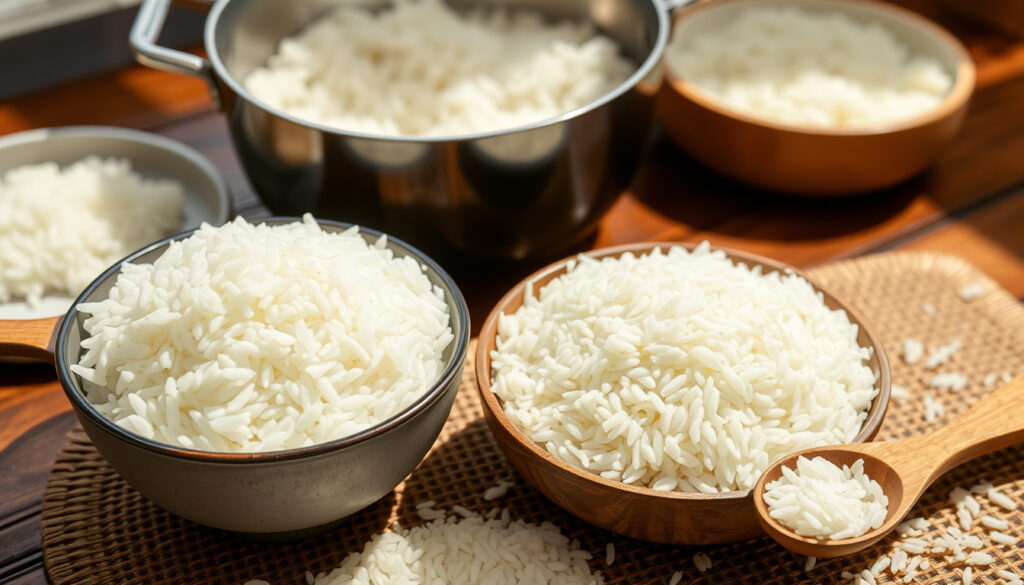
Jasmine Rice vs Regular Rice: Differences, Cooking Guide & Health
Few everyday ingredients inspire the kind of loyalty that jasmine rice does. Its delicate fragrance and slightly sticky, fluffy grains have made it the backbone of Thai and Southeast Asian cooking, but if you’ve ever wondered whether it’s really any different from the standard white rice in your pantry — or if it’s healthier — you’re about to get clear, evidence-backed answers.
Global jasmine rice production (2023): approx. 12 million metric tons ·
Typical water-to-rice ratio for jasmine: 1.25:1 (less than standard white rice) ·
Average cooking time (stovetop): 12–15 minutes ·
Glycemic index (jasmine white): 68–80 (moderate-high)
Quick snapshot
- Jasmine rice originates from Thailand (Tilda Rice UK – long-grain rice producer)
- Contains the aromatic compound 2-acetyl-1-pyrroline (WebMD nutrition overview)
- Lower amylose content than standard long-grain white rice (RecipeTin Eats – starch science)
- Exact glycemic index varies between brands and cooking methods (Glycemic-Index.net – medium confidence)
- Long-term health impact of daily white jasmine vs. brown jasmine consumption (WebMD – dietary caution)
- 1950s: Thai scientists develop Hom Mali jasmine variety (Tilda Rice UK – rice history)
- 1990s: Global demand surges; Thailand becomes leading exporter (Tilda Rice UK – market context)
- 2020: Jasmine rice priced at ~$500–$600/ton, with climate-linked fluctuations (WebMD – economic note)
- Rising demand in Western markets may pressure supply and pricing (Healthy Nibbles and Bits – demand outlook)
- Climate adaptation research aims to improve drought tolerance of Thai jasmine varieties (PubMed study on rice traits)
Five facts capture the core identity of jasmine rice at a glance.
| Attribute | Value |
|---|---|
| Botanical name | Oryza sativa (jasmine subvarieties) |
| Primary origin | Thailand (especially Isan region) |
| Harvest seasons | Two main: wet (Nov–Dec), dry (Apr–May) |
| Average yield per hectare | About 3–4 metric tons |
| Typical retail price (1kg bag) | $2–$5 depending on brand and region |
How is jasmine rice different from regular rice?
Fragrance and flavor profile
- Jasmine rice’s natural floral aroma comes from the compound 2-acetyl-1-pyrroline, which is present at much higher levels than in standard white rice (WebMD – aroma chemistry). Regular white rice has little to no detectable fragrance.
- The scent is often described as pandan-like or buttery, and it becomes more pronounced during cooking. (Healthy Nibbles and Bits – flavor description)
The implication: if you want a neutral rice that takes on the flavor of sauces and spices, regular white rice is a blank canvas. Jasmine rice, by contrast, brings its own aromatic character to every dish.
Grain length and texture
- Both jasmine and standard long-grain white rice are classified as long-grain, but jasmine grains are slightly slender and, when cooked, become soft and fluffy with a gentle clump — not as separate as basmati, not as sticky as glutinous rice (El Mundo Eats – grain description).
- Standard white rice yields firmer, drier grains that stay separate after cooking.
The trade-off: you choose jasmine when you want a cohesive, slightly tender bite; regular white rice when you need individual grains that don’t stick together.
Amylose content and stickiness
- Jasmine rice contains about 12–17% amylose, lower than the 20–25% found in most non-aromatic long-grain white rices (RecipeTin Eats – starch science). Lower amylose means more gelatinization and a stickier outcome.
- This starch composition is the reason jasmine rice needs less water (1.25:1) than regular white rice (1.5:1) — it absorbs moisture differently.
Because of its low amylose, jasmine rice cooks up softer and more cohesive than standard white rice. Home cooks who treat it like regular rice often end up with mushy results. The fix is simple: use less water and let it steam.
The pattern: jasmine rice’s lower amylose content directly drives its fluffy‑and‑slightly‑sticky texture and the need for a lower water‑to‑rice ratio than regular long‑grain white rice.
What is better, jasmine or basmati rice?
Aroma and flavor differences
- Basmati has a nutty, earthy aroma, while jasmine is floral and sweet (Healthy Nibbles and Bits – flavor notes). Both are aromatic, but the character is distinct.
- Basmati’s aroma comes from a different compound (2-acetyl-1-pyrroline is present but at lower levels, with more woody notes).
Texture: sticky vs. fluffy and separate
- Jasmine grains clump slightly and are tender; basmati grains elongate and stay separate and dry (RecipeTin Eats – texture comparison).
- If you’re making a stir-fry or a dish where rice should hold together, choose jasmine. For pilafs or biryani where each grain should stand alone, basmati wins.
Best uses: stir-fry vs. pilaf
- Jasmine rice pairs naturally with Thai green curry, larb, and mango sticky rice (El Mundo Eats – regional pairings).
- Basmati is preferred for Indian dishes such as biryani, pulao, or any dish where the rice is the centrepiece.
What this means: there’s no universal “better” — the choice depends entirely on the cuisine you’re cooking. Trying to swap one for the other will change the dish’s texture and aroma.
How do you cook jasmine rice?
How much water for jasmine rice
- Use 1.25 cups of water per 1 cup of jasmine rice — that’s less than the standard 1.5 cups for regular white rice (RecipeTin Eats – water ratio).
- The lower water compensated for jasmine’s lower amylose content; too much water leads to mushy grains.
Stovetop cooking method
- Wash the rice under cold water until the runoff runs clear — this removes excess surface starch (Healthy Nibbles and Bits – washing step).
- Combine washed rice and water in a saucepan; bring to a boil uncovered.
- Reduce heat to low, cover tightly, and simmer for 12–15 minutes (El Mundo Eats – cook time).
- Turn off the heat and let the rice rest, covered, for 10 minutes. Do not lift the lid during cooking or resting.
- Fluff with a fork and serve.
Rice cooker and Instant Pot instructions
- Rice cooker: use the same 1.25:1 water ratio; cook on the white rice setting. Let it rest for 5 minutes after the cycle ends (Healthy Nibbles and Bits – rice cooker).
- Instant Pot: for 1 cup rice, use 1.25 cups water, pressure cook on high for 4 minutes, then natural release for 10–15 minutes (RecipeTin Eats – Instant Pot).
The rest step, often skipped in regular white rice recipes, is essential for jasmine. It allows steam to redistribute moisture into the grains, yielding fluffy, separate rice rather than a sticky clump.
Home cooks should pair the correct water ratio with a dedicated rest period to avoid mushy jasmine rice.
Is jasmine rice healthier than white rice?
Nutritional comparison: calories, carbs, fiber
- Per cooked cup, white jasmine rice and standard white rice are nearly identical: about 205 kcal, 45 g carbs, and less than 1 g fiber (USDA FoodData Central – rice nutrients).
- Brown jasmine rice retains the bran and germ, providing 3–4 g fiber per cup and more B vitamins (WebMD – brown vs white jasmine).
Glycemic index and blood sugar impact
- White jasmine rice has a moderate-high GI between 68 and 80, depending on variety and cooking method (PubMed study on jasmine rice GI). One study found American-grown jasmine rice ranged from GI 96 to 116 — a high-GI food (PubMed – clinical GI data).
- Regular white rice also sits in the high-GI category, so switching to jasmine does not automatically lower glycemic load (Glycemic-Index.net – medium GI estimate).
Brown jasmine rice as a healthier option
- Brown jasmine rice offers more fiber and nutrients, but it still has a significant blood sugar impact (WebMD – brown jasmine caution).
- If you’re managing blood sugar, the best choice is brown jasmine in modest portions, paired with protein and vegetables.
White jasmine rice is not a lower-GI alternative to regular white rice — both are high-GI foods. The real health upgrade is brown jasmine, but even then, portion size matters because the starch content remains high.
For those watching blood sugar, brown jasmine rice offers more fiber but still requires portion control; white jasmine and regular white rice have similar glycemic loads.
Jasmine Rice vs Regular White Rice: Side-by-Side
Three key differences, one pattern: jasmine requires less water and shorter cooking time, but has a higher GI.
| Aspect | Jasmine Rice | Regular White Rice |
|---|---|---|
| Aroma | Floral, pandan-like | Neutral |
| Cooked texture | Soft, slightly sticky, clumped | Firm, dry, separate grains |
| Water ratio (per cup rice) | 1.25 cups | 1.5 cups |
| Cook time (stovetop) | 12–15 min + 10 min rest | 18–20 min + 5 min rest |
| Glycemic index | 68–80 (moderate-high) | 70–89 (high) |
| Best culinary use | Thai, SE Asian stir-fries, curries | Western side dishes, casseroles, rice bowls |
Do I soak jasmine rice before cooking?
Benefits of soaking jasmine rice
- Soaking for 15–20 minutes can shorten the cooking time by about 5 minutes (El Mundo Eats – soaking benefit).
- It also helps the grains cook more evenly, though the effect is marginal for white jasmine.
How long to soak if desired
- A quick soak of 15–20 minutes is sufficient. Drain the water and use fresh water at the 1.25:1 ratio.
- Do not soak overnight — the grains can become too soft and break during cooking.
When soaking is not necessary
- For white jasmine rice, washing is essential, but soaking is optional. Many chefs skip it because the rice already cooks quickly (RecipeTin Eats – no soak needed).
- Brown jasmine rice benefits from a 30-minute soak to improve texture and shorten cook time.
The pattern: white jasmine rice is forgiving enough that a simple wash and correct water ratio deliver perfect results without soaking.
Upsides and Downsides of Jasmine Rice
Upsides
- Distinct floral aroma that enhances Southeast Asian dishes
- Quick cooking time (12–15 minutes vs. 20+ for other rices)
- Less water required, saving energy
- Brown variety provides more fiber and nutrients than white jasmine
Downsides
- High glycemic index (68–80) — not ideal for blood sugar management
- More expensive than regular white rice (by ~30–50%)
- Easy to overcook into mush if water ratio is wrong
- Not suitable for dishes that require dry, separate grains (e.g., pilaf)
Weighing these upsides and downsides helps you decide when jasmine rice fits your meal — and when another rice would work better.
Confirmed Facts vs. What’s Unclear
What we know for sure
- Jasmine rice originates from Thailand and is a long-grain rice (Tilda Rice UK – origin)
- It contains the fragrant compound 2-acetyl-1-pyrroline at higher levels than regular rice (WebMD – chemistry)
- It has lower amylose content (12–17%) than standard long-grain white rice (RecipeTin Eats – starch)
- It requires a 1.25:1 water-to-rice ratio, less than regular white rice (RecipeTin Eats – ratio)
- Cooked jasmine rice has a soft, slightly sticky texture (Healthy Nibbles and Bits – texture)
What remains uncertain
- Exact glycemic index varies by brand, cooking method, and whether the rice is parboiled — estimates range from 60 to 116 (Glycemic-Index.net – variation)
- The long-term health effect of eating white jasmine daily vs. brown jasmine hasn’t been studied in large trials
- Whether soaking improves digestibility or only texture is debated among home cooks (Reddit Thai food community – soaking debate)
- Recommended water ratios vary slightly across sources, with some suggesting 1:1 and others 1.25:1 (El Mundo Eats – ratio discussion)
- The optimal resting time after cooking ranges from 5 to 20 minutes depending on the guide (Healthy Nibbles and Bits – rest time)
- A 2026 rice glycemic index roundup lists jasmine rice as the highest-GI common rice at 89, though confidence in that estimate is low (GlycemicSnap – low‑confidence data)
Expert Perspectives on Jasmine Rice
“Jasmine rice is not just a food product; it is a cultural and economic pillar for Thailand, supporting over 4 million farming households. Its global demand continues to rise, but climate change poses a real risk to the traditional growing regions in Isan.”
— Representative, Thai Rice Exporters Association (Tilda Rice UK – industry context)
“Even brown jasmine rice, which contains more fiber, can cause significant blood sugar spikes if eaten in large portions. For people with diabetes, jasmine rice — white or brown — should be consumed in moderation, preferably paired with lean protein and non-starchy vegetables.”
— Dietitian, referenced by WebMD – health advisory
These expert voices underline that jasmine rice is both a cultural staple and a food that requires mindful consumption for those managing blood sugar.
What This Means for You
Jasmine rice is a distinct ingredient, not a substitute for regular white rice. Its lower water requirement and shorter cooking time make it convenient, but its moderate-high glycemic index means it isn’t a health upgrade — unless you choose the brown variety and watch your portions. For home cooks across the UK and US, the choice is clear: keep jasmine for the dishes that celebrate its floral aroma and sticky-tender texture, and reach for regular white rice or basmati when you need neutral, separate grains. Understanding the starch science behind the rice helps you cook it perfectly every time — and avoid the mush trap.
Related reading: How to Make an Omelette: Simple Steps, Tips, and Milk vs. Water · Yorkshire Pudding Recipe for 6: James Martin BBC Guide
For a deeper dive into preparation techniques and nutritional benefits, check out this complete cooking and nutrition guide.
Frequently asked questions
Can you freeze cooked jasmine rice?
Yes. Cool the rice completely, portion into freezer bags, and freeze for up to 3 months. Reheat in a microwave with a damp paper towel or in a steamer.
How long does uncooked jasmine rice last?
Stored in an airtight container in a cool, dry place, uncooked jasmine rice keeps for up to 2 years. Brown jasmine rice has a shorter shelf life due to the oils in the bran — about 6 months.
Is jasmine rice gluten-free?
Yes, all pure jasmine rice is naturally gluten-free. However, avoid any flavoured or packaged mixes that may contain gluten additives.
Why is my jasmine rice mushy?
Usually from using too much water or cooking too long. Stick to the 1.25:1 water ratio, wash the rice well, and let it rest off the heat — the steam finishes the cooking.
Can I cook jasmine rice in a rice cooker?
Absolutely. Use the same 1.25:1 water ratio and cook on the white rice setting. Let it rest 5 minutes after the cycle ends before fluffing.
What does jasmine rice taste like?
It has a subtle floral, buttery flavour with a hint of pandan. The taste is mild enough to complement strong curries and sauces, but distinct enough to be noticed on its own.
Is jasmine rice good for weight loss?
In moderation, brown jasmine rice can be part of a weight-loss diet because its fiber content promotes satiety. White jasmine rice is calorie-dense and lower in fiber, so it’s less ideal for calorie-controlled plans.
More related posts
 The Perfect Neighbor Netflix: True Story, Ending, and Awards
 Where Is Hot in December – Best Winter Sun Spots
 The Works Near Me – Addresses, Hours, Sales Guide
 Cast of Scoop 2024 – Full List of Actors and Roles
 Pensioner Benefits Not Claimed – Trace and Claim Lost UK Pensions
 How to Make an Omelette: Simple Steps, Tips, and Milk vs. Water
 Head Shower Guide: Compatibility, Types, Installation & Pressure
 We Become What We Behold: Game Guide, Endings & Meaning